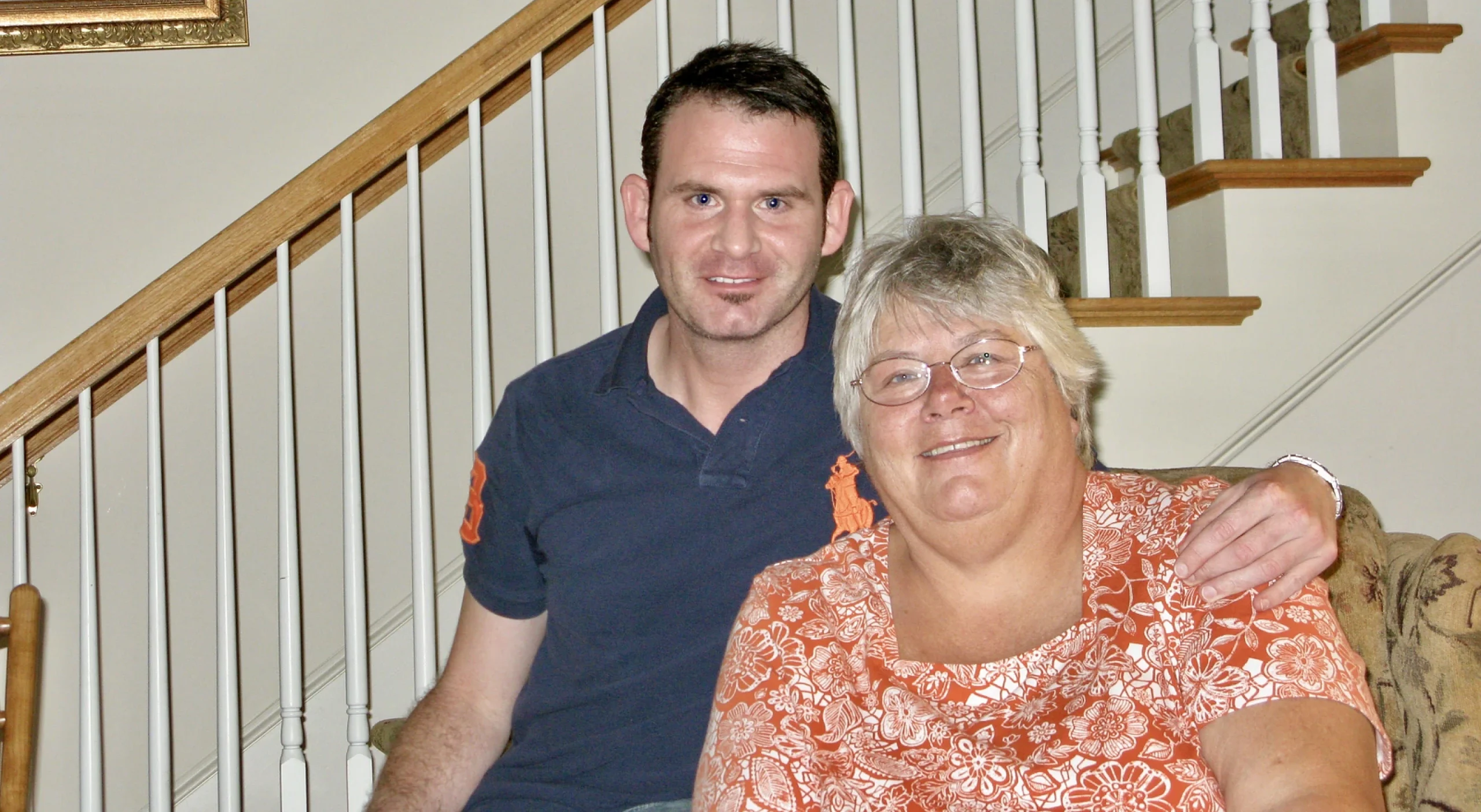
Four years ago today I lost my mother. What we had, at its core, was a kind of mutual understanding: we simply got each other. She was my biggest cheerleader, and no one held more hope for my success, personally or professionally. I have a husband and people in my life who love and support me, so I am not writing from a void. But that particular form of belief in you is its own thing, and I feel its absence. We were not without our moments early on, though as adults the relationship was largely an easy one, and I recognize that this is not everyone’s story. This week’s post is written with her in mind.
There is a particular relationship I have witnessed many times over more than twenty years of practice: the bond between a gay man and his mother. It gets spoken about as a cliché, and I want to be careful with it here, because the reality is richer and more complicated than the stereotype allows.
More Than a Trope
Popular culture flattens this relationship into a punchline, the devoted mother and her doting son. But when I sit with gay men talking about their mothers, what emerges is rarely simple devotion. It is closer to recognition. For many gay boys, long before they had words for who they were, their mother was the first person who truly saw them. Not the
version of them the world expected. The actual child in front of her.
That kind of early witnessing matters. Attachment research tells us that being accurately seen by a caregiver is one of the foundations of a secure sense of self. For a child who senses, even quietly, that he is different, having one person who reflects him back without flinching can be protective in ways that carry across a lifetime.
Why the Bond Can Run So Deep
There are real reasons this closeness develops in many families, and none of them require stereotype. A boy who feels unsafe among peers, or distant from a father who expected a different kind of son, may find in his mother the one relationship where he does not have to perform. She becomes home base. Shared sensibilities often deepen it over the years: emotional attunement, humor, taste, conversation. And in many mothers there is a fierce protectiveness that develops early, sometimes before either of them consciously understands why. For some men this bond becomes a lifelong source of strength. She was the first ally, the first person told, the one who stood between him and a world that had not yet caught up.
When the Story Is More Complicated
I want to be honest about the other side, because not every gay man carries this warmth, and those men belong in this conversation too. Some mothers could not accept their sons. Some offered love with conditions attached. Some were loving in childhood and faltered at the coming out. And some men had mothers who saw them clearly and still turned away, which can be the deepest wound of all, precisely because she was the one who knew. There is a quieter complication as well. Closeness itself can become tangled. When a mother makes her son her confidant, her emotional partner, or the keeper of her happiness, the bond can slide into a role he cannot put down. Many gay men describe a particular guilt in adulthood, a sense that separating from their mother in even healthy ways amounts to betrayal. Untangling devotion from obligation is real therapeutic work. It does not mean loving her less.
Grief, Repair, and What Remains
Because this bond runs deep, its ruptures and losses run deep too. When a mother dies, many gay men describe losing not just a parent but the original witness to their life. I know this grief personally. There is a great deal of love in my life, and still, the experience of someone quietly rooting for you the way a mother does is not one that gets replaced.
That grief deserves its own room. And when the relationship was damaged, there is often grief for the mother he needed and did not get, which is just as legitimate. Repair is sometimes possible. Mothers evolve, sons soften, and conversations that were impossible at twenty can happen at forty. When repair is not possible, healing still is. Part of the work of therapy is learning to give ourselves some of what we hoped she would give, and to build relationships that offer the witnessing we needed.
Honoring the Relationship, Whatever Shape It Took
If you are a gay man reading this, your relationship with your mother, whether it was your safest place, your deepest hurt, or some of each, has shaped how you love, how you trust, and how you see yourself. It is worth understanding. Not as a stereotype, and not as a verdict, but as one of the formative relationships of your life.
If you’re curious about exploring any of this, I offer virtual therapy across New York, Connecticut, and Massachusetts, and in person sessions in Manhattan. Consultations are free if you’d like to talk.
Read more reflections on healing, relationships, and growth on the blog: brettpsych.com/blogs
The content of this blog is for informational and educational purposes only and does not constitute medical or mental health advice. Reading it does not create a therapist-client relationship. If you are struggling or in crisis, please reach out to a qualified professional. If you are experiencing a mental health emergency, call or text 988 (the Suicide and Crisis Lifeline) or dial 911.