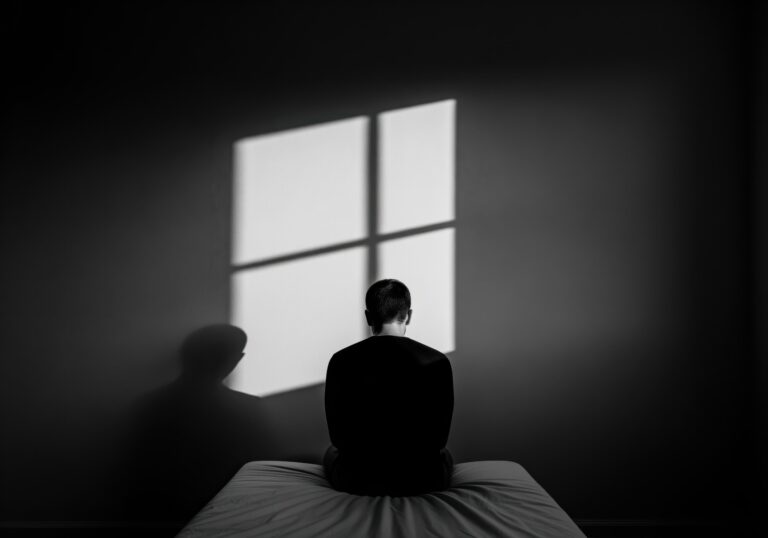
For a lot of people, doing nothing was never neutral. If you grew up in a home where love tracked achievement, or where the mood could turn and staying busy kept you useful and out of range, your nervous system filed rest under unsafe, and productivity became less a habit than a shelter.
Fast forward a few decades and the shelter has a mortgage. You’re an adult with a to-do list where your personality should be, and the moment you stop moving, something in your chest starts asking what you’re forgetting, what you’re falling behind on, who you’re letting down. That isn’t laziness anxiety so much as an old alarm system that never got the memo the war ended.
Performers and freelancers get a professional version layered on top. When there’s no boss defining “off the clock,” every hour is theoretically a hustle hour, so rest always costs something. And ADHD brains have their own twist: stillness without stimulation isn’t peaceful, it’s loud. Plenty of my clients relax best while doing something, and that counts.
The Body Doesn’t Have an Off Switch, It Has a Dimmer
The part nobody tells you is that you can’t go from sixty to zero, because nervous systems don’t work that way. A body that’s been braced all week can’t be ordered into serenity by a hammock. When people say “I’m worse on vacation,” I believe them. The stillness finally gives all that stored revving somewhere to be felt, and it feels awful, so they conclude rest doesn’t work for them and go back to full speed.
Rest, it turns out, is not the absence of doing but a state your body has to downshift into, gear by gear.
Learning to Downshift
So skip the fantasy of instant serenity and work the gears instead.
Transition on purpose: a walk, a shower, a change of clothes, something that tells the body the workday is over, because closing the laptop alone doesn’t. Try active rest before still rest; cooking, drawing, lifting, wandering a museum all let the system idle down without demanding silence it can’t yet supply. Give leisure a container, an actual start and end time, which quiets the guilt engine that runs on “I should be doing something.” And when the alarm pipes up mid-rest, you don’t have to obey it or argue with it. Just notice: there’s the old alarm. It’s allowed to ring while you stay in the chair.
And if rest reliably floods you with dread rather than mere restlessness, that’s not a scheduling problem. That’s history worth understanding, and it’s very good therapy material.
You’re allowed to be a person, not just a productivity report. Some of us just need practice.
If your off switch has been broken as long as you can remember, let’s look at it together. I offer virtual therapy across New York, Connecticut, and Massachusetts, and in-person sessions in Manhattan. Consultations are free if you’d like to talk.
Read more reflections on healing, relationships, and growth on the blog: brettpsych.com/blogs
The content of this blog is for informational and educational purposes only and does not constitute medical or mental health advice. Reading it does not create a therapist-client relationship. If you are struggling or in crisis, please reach out to a qualified professional. If you are experiencing a mental health emergency, call or text 988 (the Suicide and Crisis Lifeline) or dial 911.